
Invisalign vs Braces: Which Is Right for You? (2026 Box Hill Guide)
- Home
- Invisalign vs Braces: Which Is Right for You? (2026 Box Hill Guide)
Invisalign vs Braces: Which Is Right for You? (2026 Box Hill Guide)
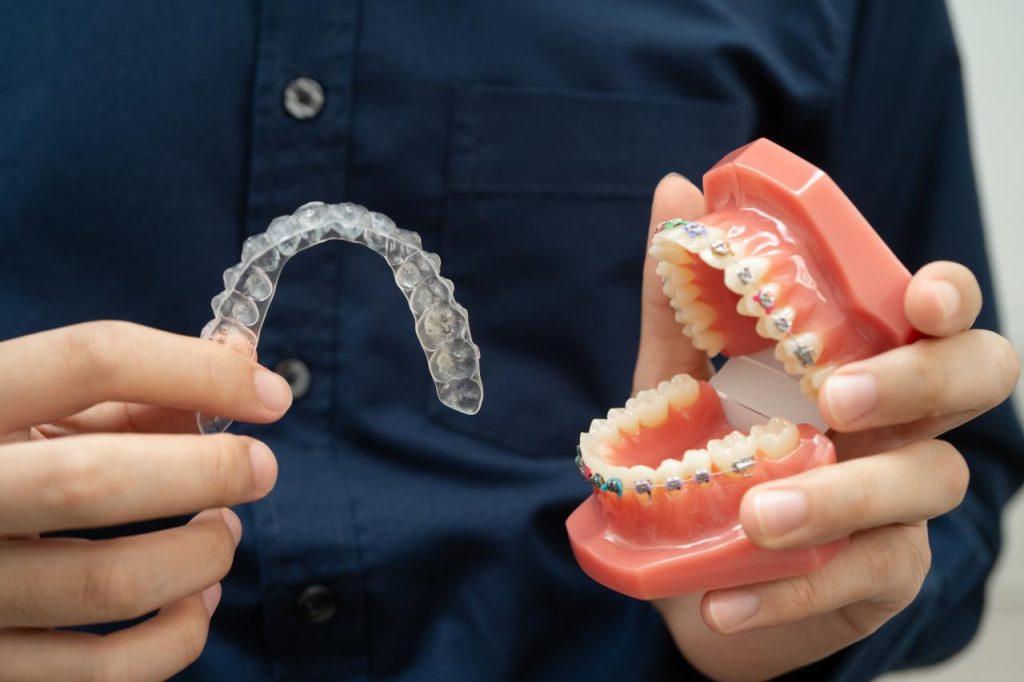
Straightening your teeth is one of the best investments you can make in your smile and your long-term oral health. But should you choose Invisalign clear aligners or traditional braces? Both work well — the right choice depends on your lifestyle, your case and your budget. Here’s an honest 2026 comparison to help you decide.
Invisalign vs braces at a glance
| Feature | Invisalign | Traditional braces |
|---|---|---|
| Appearance | Clear, nearly invisible | Metal brackets and wires |
| Removable | Yes – for eating & cleaning | No – fixed in place |
| Comfort | Smooth plastic, no wires | Can irritate cheeks initially |
| Best for | Mild–moderate cases, adults & teens | All cases, incl. complex bite issues |
| Cleaning | Brush & floss as normal | Requires extra care around brackets |
| Discipline needed | Must wear 20–22 hrs/day | Works automatically once fitted |
Invisalign: the discreet, flexible option
Invisalign uses a series of custom-made clear aligners to gradually move your teeth. Because they’re removable, you can eat what you like and clean your teeth normally which is why many adults and working professionals prefer them. The trade-off is discipline: aligners only work if you wear them 20–22 hours a day. Learn more on our Invisalign and clear aligners page.
Braces: reliable for every case
Traditional dental braces are fixed to the teeth, so they work continuously without relying on you to keep them in. They remain the most versatile option for complex crowding, rotations and bite corrections. Modern braces are smaller and more comfortable than many people expect.
How much do they cost in 2026?
Across Australian practices in 2026, both treatments generally fall in a broad band of roughly $4,500 to $9,000, depending on complexity. Simple cases sit at the lower end; full-arch corrections cost more. Because the ranges overlap, cost alone usually isn’t the deciding factor — suitability and lifestyle are.
Health-fund tip: Most major funds include some orthodontic cover on major extras, though annual and lifetime limits and waiting periods apply. We’ll help you check what you can claim.
So, which should you choose?
Choose Invisalign if you value discretion and flexibility and can commit to wearing your aligners. Choose braces if your case is complex or you’d rather a fixed, fit-and-forget solution. The best way to decide is a professional assessment explore all your options on our orthodontics in Box Hill page.
Start your smile journey. Book an orthodontic consultation at Supreme Dental Smile Gallery in Box Hill. Call (03) 9899 0288 or contact us online.